원쁠원 앞에서 무너졌어
1+1 Got Me Again
하나만 사려고 했는데, '원쁠원'이라잖아요.
교재세종학당 한국어 2 · 1과 -네 (EasyKorean #01 짝 수업) · 헐 · 원쁠원 · -잖아는 교재 밖 구어로, 1과 장면에서 확장해요.Sejong Korean 2 · Unit 1 -네 (EasyKorean #01 paired) · 헐 · 원쁠원 · -잖아는 beyond the textbook로, Unit 1 장면에서 확장해요.세종학당 교재 무료로 보기 ↗
 Instagram Reels
이렇게 말해요
교과서 말(EasyKorean #01) → 진짜 말(K-Real #01)
- 와, 사람이 진짜 많네. → 헐, 사람 왜 이렇게 많아? — heol, sa-ram wae i-reo-ke ma-na · Whoa, why is it so packed?
- 어? 이것도 세일이네! → 이거 원쁠원이네?! — i-geo won-ppeul-won-i-ne · Wait, this one's buy-one-get-one?
- 어쩌다 열 개나 담았지? → 잠깐, 이게 다 얼마야? — jam-kkan, i-ge da eol-ma-ya · Hold on, how much is all this?
- 그래도 다 세일이니까. → 아~ 몰라, 몰라. 세일이었잖아. — a~ mol-la, mol-la · Whatever. It was on sale.
오늘 배울 것
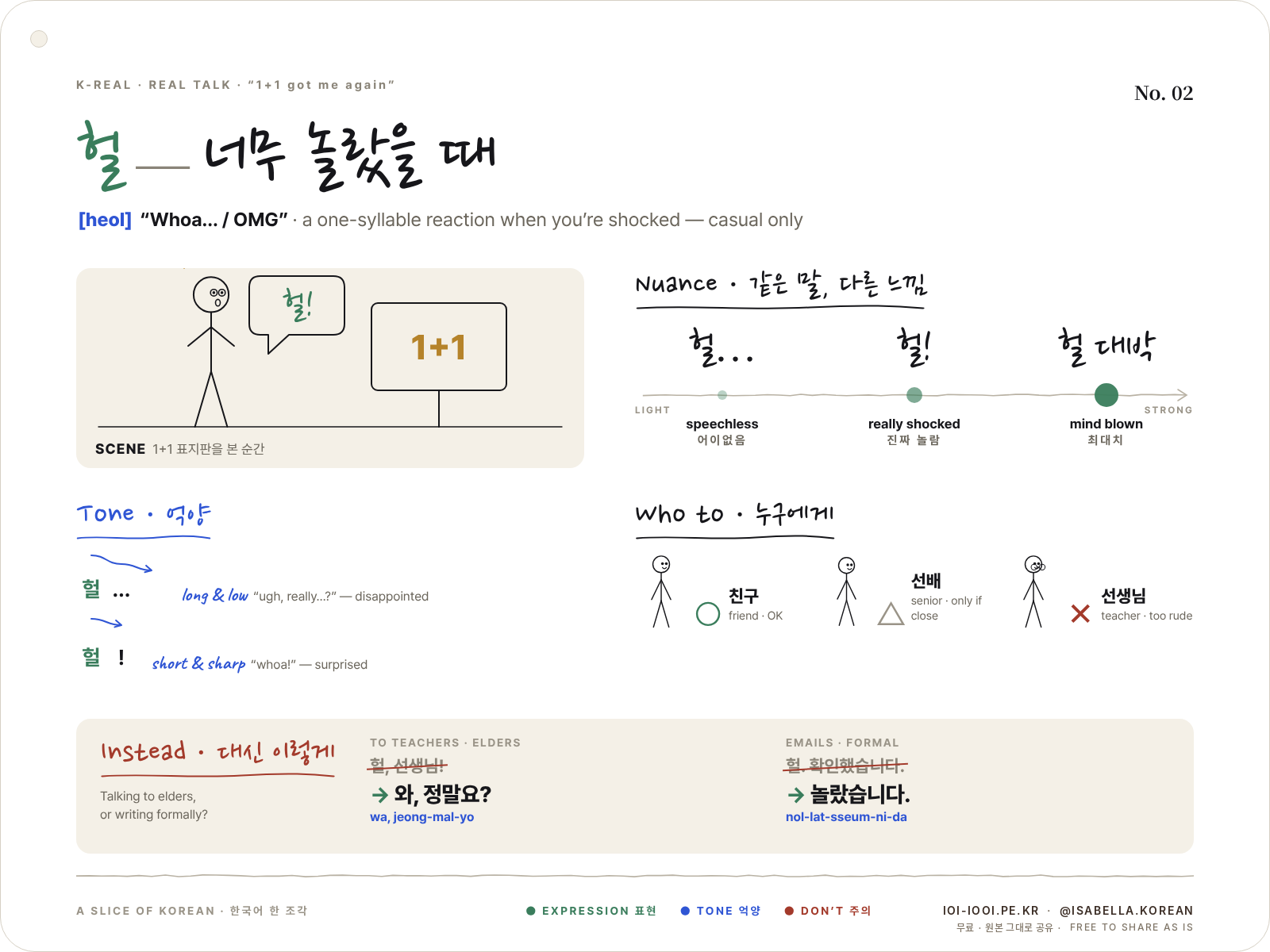
헐
한 글자로 끝나는 놀람 · "Whoa…"헐
surprise in one syllable · "Whoa…"너무 놀라서 할 말이 없을 때 나오는 소리예요. 좋은 일에도, 나쁜 일에도 써요.
- 헐… (speechless) → 헐! (really shocked) → 헐 대박 (mind blown) — 길이와 덧붙는 말에 따라 세기가 달라져요.
- 길고 낮게 "헐…"은 어이없음, 짧고 높게 "헐!"은 놀람. Tone changes the meaning.
- 입술을 둥글게 모으지 않아요. ㅓ(eo) ≠ ㅗ(o) · 헐 ≠ 홀
- 친구·혼잣말에서만 써요. 선생님, 손님에게는 → "와, 정말요?"
The sound you make when you’re too surprised for words — for good news and bad.
- 헐… (speechless) → 헐! (really shocked) → 헐 대박 (mind blown) — length and add-ons change the strength.
- Long and low “헐…” = disbelief; short and high “헐!” = shock. Tone changes the meaning.
- Don’t round your lips: ㅓ (eo) ≠ ㅗ (o) · 헐 ≠ 홀
- Only with friends or to yourself. To a teacher or a customer → “와, 정말요?”
원쁠원
글자와 다르게 읽는 말원쁠원
said differently from how it’s written'1+1'은 원래 '원 플러스 원'이지만, 가게에서는 거의 '원쁠원'이라고 해요. '2+1'은 '투쁠원'. In real life, "plus" shrinks to "ppeul".
‘1+1’ is officially 원 플러스 원, but in shops almost everyone says 원쁠원. ‘2+1’ is 투쁠원. In real life, “plus” shrinks to “ppeul”.
-잖아
이미 아는 걸 짚어 줄 때-잖아
pointing out what we both know- 내가 말했잖아. — I told you (you know that).
- 세일이었잖아. — 혼잣말이면 "그러니까 괜찮아"라는 자기 합리화가 돼요.
- 존댓말은 '-잖아요'. 따지는 느낌이 날 수 있어서 윗사람에게는 조심해요.
- 내가 말했잖아. — I told you (you know that).
- 세일이었잖아. — Said to yourself, it becomes self-justification: “so it’s fine.”
- The polite form is -잖아요, but it can sound like arguing — be careful with people above you.
말해 보기 · Try it
Try it
친구가 "이 가방 반값이래!"라고 말했어요. 오늘 배운 말로 대답해 보세요. → 예: "헐, 진짜? 그럼 사야 되잖아!"
A friend says, “This bag is half price!” Answer with today’s words. → e.g. “헐, 진짜? 그럼 사야 되잖아!”
출력해서 쓰는 카드
이 장면으로 수업하기
- 수업 목표
- 같은 상황을 교과서 말과 친구 말투로 바꿔 말할 수 있다. 감탄사 '헐'을 써도 되는 관계를 판단할 수 있다.
- 교재 위치
- 세종학당 한국어 2 · 1과 -네 (EasyKorean #01 짝 수업) · 헐 · 원쁠원 · -잖아는 교재 밖 구어로, 1과 장면에서 확장해요.
- 짝 수업
- 월요일 EasyKorean #01(교과서 말) → 수요일 K-Real #01(진짜 말). 같은 장면이라 두 영상을 이어서 보여 주면 '말의 온도' 차이가 바로 보여요.
- Lesson goal
- Say the same situation in textbook Korean and in friend talk, and judge when 헐 is okay to use.
- Textbook
- Sejong Korean 2 · Unit 1 -네 (paired with EasyKorean #01) · 헐, 원쁠원 and -잖아 are everyday speech beyond the textbook, built on the Unit 1 scene.
- Paired lesson
- Monday EasyKorean #01 (textbook) → Wednesday K-Real #01 (real life). Same scene, so playing them back to back shows the ‘temperature’ of the language.
25분 수업 흐름 · 활동 · 자주 하는 실수 펼치기
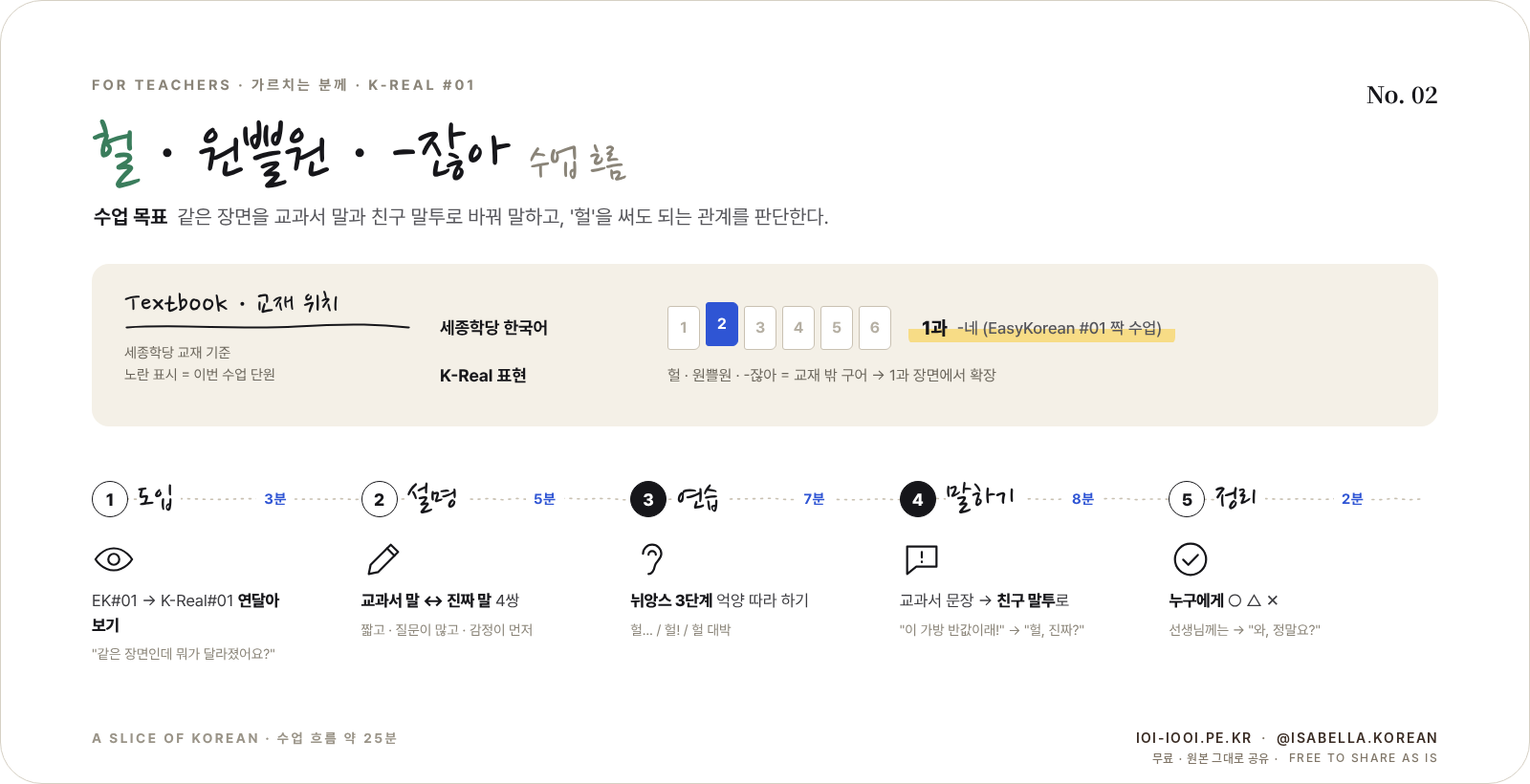
- 도입 (3분)
- 두 영상을 연달아 보여 주고 "같은 장면인데 무엇이 달라졌어요?"라고 물어 학습자가 직접 차이를 찾게 해요.
- 설명 포인트
- 진짜 말은 문장이 짧고, 질문이 많고, 감정이 앞에 와요. 카드의 '누구에게(친구 ○ / 선배 △ / 선생님 ✕)'로 관계에 따른 사용 범위를 정리해요.
- 카드 활용 활동
- 교과서 문장을 주고 친구 말투로 바꾸기. 카드의 뉘앙스 3단계(헐… / 헐! / 헐 대박)를 억양까지 따라 하며 상황 카드와 짝짓기.
- 지도 팁
- 학습자가 교사에게 "헐!"이라고 하면 꾸짖기보다 대신 쓸 말("와, 정말요?")을 바로 알려 주세요. 관계를 배우는 좋은 기회예요.
- 자주 하는 실수
- 헐을 [홀]로 발음(입술을 둥글게), '-잖아요'를 윗사람에게 써서 따지는 말투가 되는 경우.
- Warm-up (3 min)
- Play both videos in a row and ask, “Same scene — what changed?” Let students find the differences themselves.
- Key points
- Real talk is shorter, has more questions, and puts feelings first. Use the card’s ‘Who to’ (friend ○ / senior △ / teacher ✕) to map where each word fits.
- Card activity
- Give textbook sentences to turn into friend talk. Copy the card’s three levels (헐… / 헐! / 헐 대박) with intonation and match them to situation cards.
- Teaching tip
- If a student says “헐!” to you, don’t scold — offer the alternative (“와, 정말요?”). It’s a great moment to teach relationships.
- Common mistakes
- Saying 헐 as [hol] (rounded lips); using -잖아요 with seniors so it sounds like arguing.
오늘 수업도, 수고 많으셨습니다.
커피 한 잔은 마음이 닿을 때, 부담 없이.
다음 장면으로
여기서부터 차례로 이어져요.